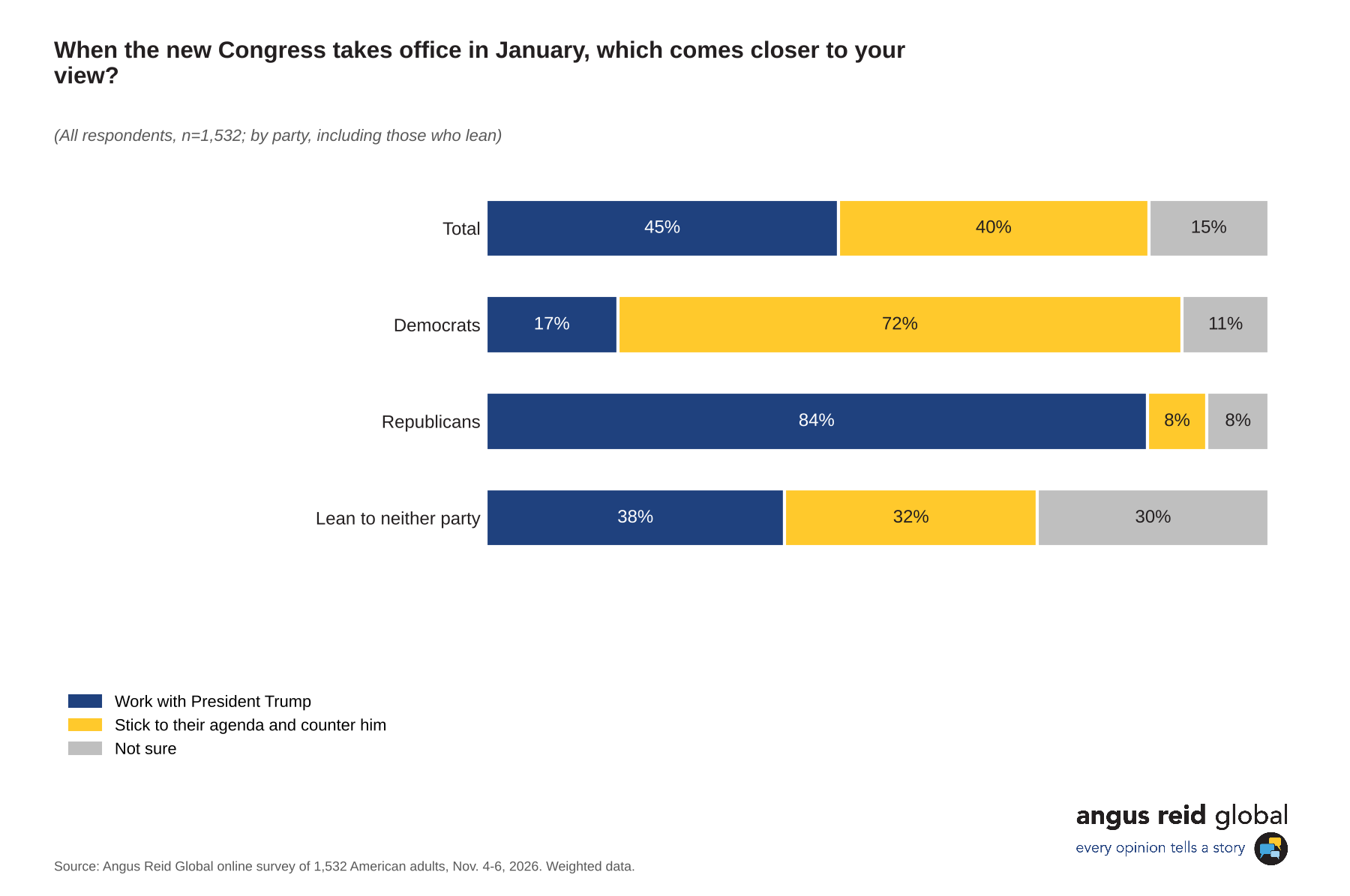
- Americans are divided over whether congressional Democrats should compromise with President Donald Trump or defend their agenda.
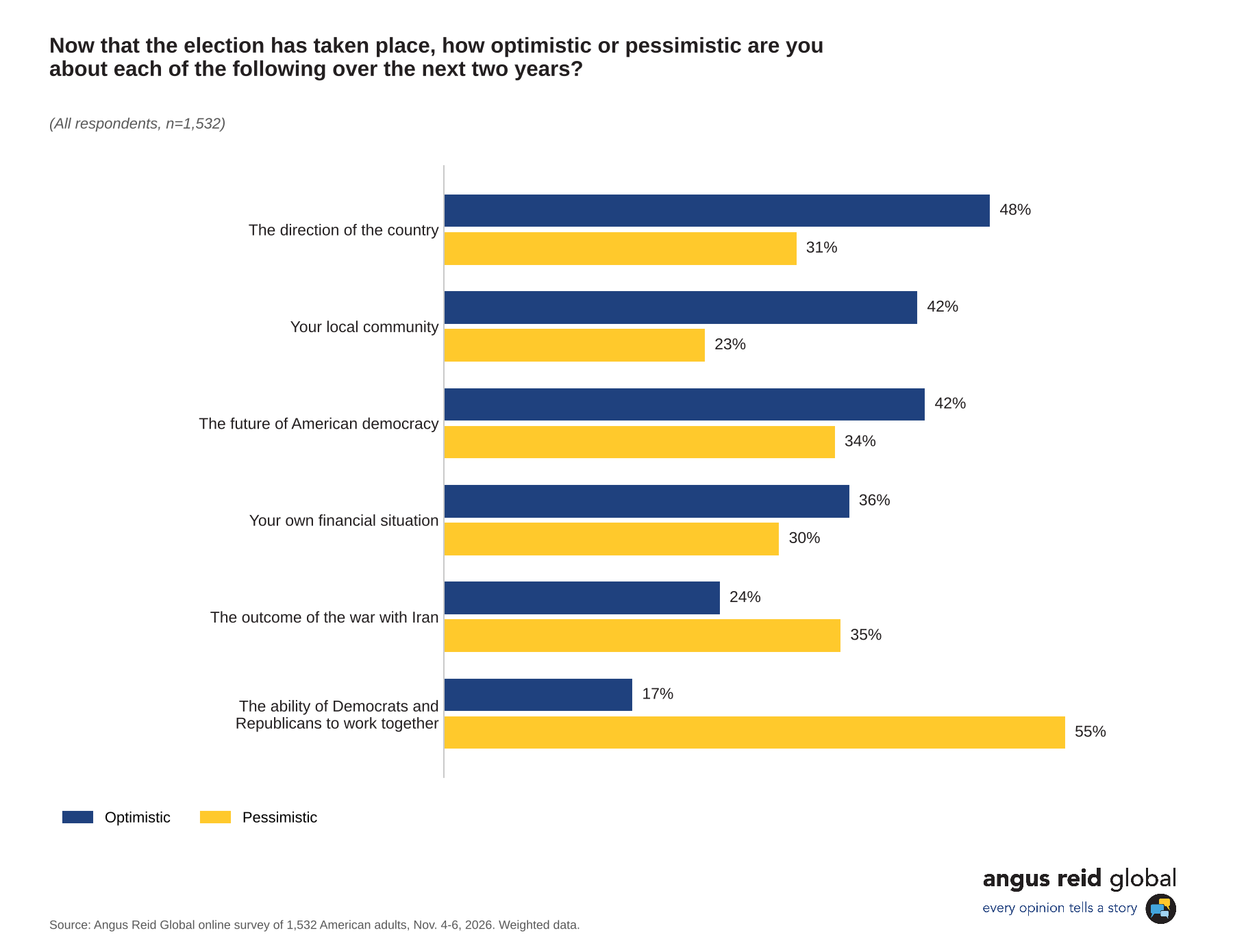
- Just 17% of Americans expect Democrats and Republicans to cooperate successfully, while 55% are pessimistic, according to Angus Reid Global.
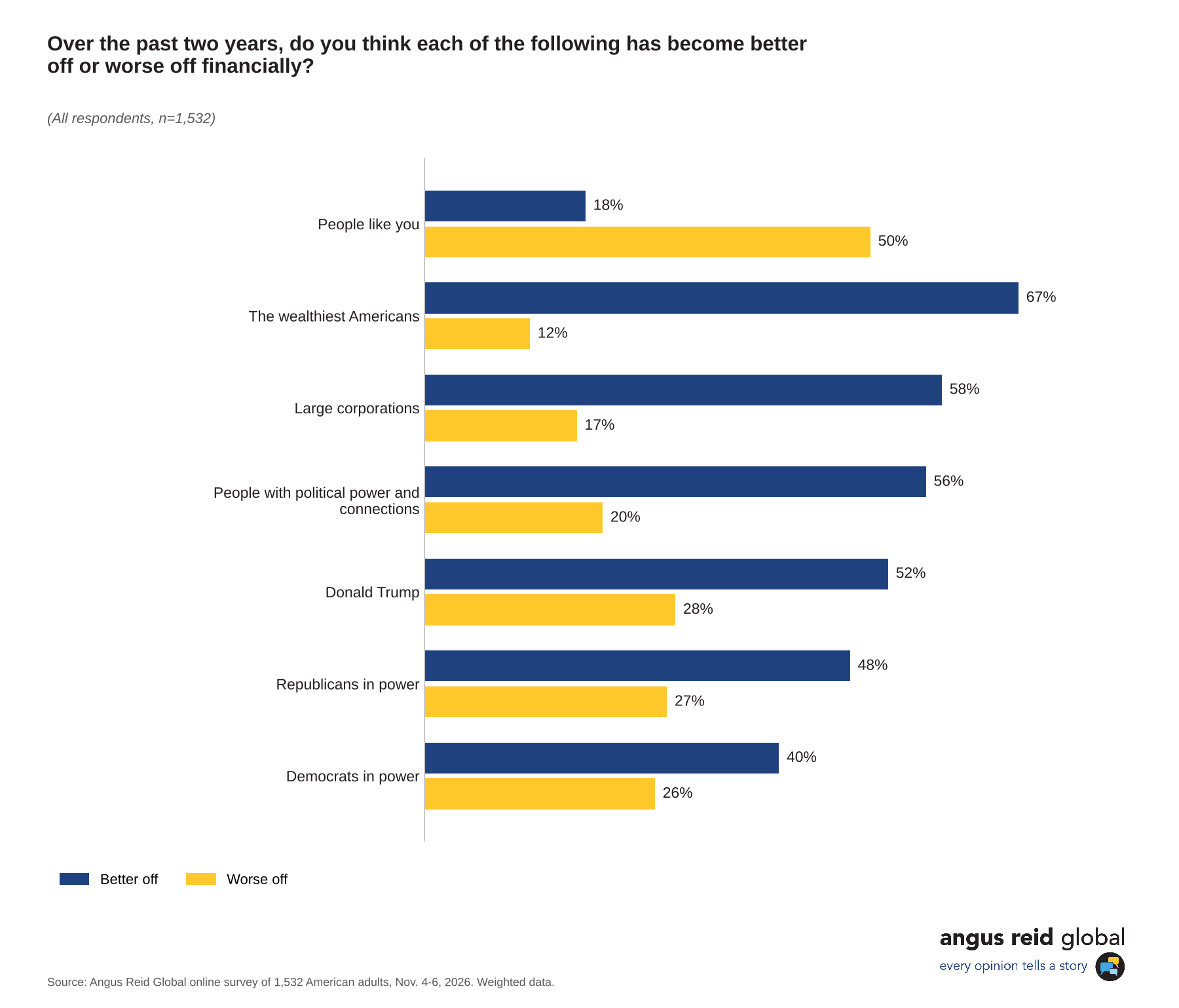
- Financial dissatisfaction adds another concern as Democrats prepare to take control of Congress.
A divided opening
Americans are divided over how Democrats should approach President Donald Trump as the party prepares to take control of Congress in January, according to Angus Reid Global. Few expect cooperation to come easily. The findings frame a challenge for the incoming majority: deciding when compromise serves its priorities and when opposition does.
Compromise or confrontation
The survey found that 45% want Democrats to work with Trump, even at the cost of compromising some priorities. Another 40% want Democrats to maintain their agenda and counter the president in certain cases, even if less gets accomplished.
Expectations remain low
Only 17% of those surveyed are optimistic that Democrats and Republicans can work together over the next two years. Meanwhile, 55% are pessimistic.
“Americans are divided on how Democrats should handle the president, but they agree on one thing: few expect the two parties to find common ground over the next two years,” said Natalie Lacey, Angus Reid Global’s executive vice president.
Financial concerns persist
Economic dissatisfaction accompanies the political uncertainty. Half of those surveyed say people like them have become financially worse off over the past two years. The poll also describes a contrasting perception that wealthy Americans, large corporations and politically connected people have gained financially.
Understanding the survey
Angus Reid Global conducted the online survey Nov. 4-6 among 1,532 American adults belonging to its Angus Reid Forum US panel. Researchers weighted responses across demographic categories and presidential voting history. The organization commissioned and funded the research itself.
The bigger question
Americans face competing expectations as Democrats prepare to take control of Congress in January, and the controversial nomination of Rep. Hakeem Jeffries for House speaker has added to constituents’ concerns. As Jeffries’ nomination faces public opposition, how might the Democrats’ decision further shape skeptical Americans’ views of both parties?
The facts
11 Democrats voted against Jeffries’ nomination. The list includes:
Publicly identified “no” voters
- Darializa Avila Chevalier — New York
- Adam Hamawy — New Jersey
- Melat Kiros — Colorado
- Donavan McKinney — Michigan
- Chris Rabb — Pennsylvania
- Claire Valdez — New York
- Don Leonard — Ohio
*Frederick Haynes - Texas; His spokesperson clarified that he missed the vote because of illness. He intended to vote “no,” but he was not one of the 11 who cast “no” ballots.
Additional resources
- Find your representative and contact information at https://www.house.gov/representatives/find-your-representative, which links ZIP codes to members’ websites and contact pages.
- Email your representative explaining whether you support Rep. Hakeem Jeffries' nomination.
- Call the office to describe your concerns about compromise or defending party priorities.
- Send a letter connecting your position to your household’s financial experience.
- Request a meeting to ask how leadership would balance negotiation and opposition.
- Ask at a public forum how representatives would judge bipartisan progress.