- Financial advisors suggest setting a holiday spending limit after covering essential bills, not before.
- Include travel, food, hosting and wrapping supplies — not just gifts.
- Track purchases and talk about debt rather than avoiding statements or struggling alone.
Holiday shopping can bring financial anxiety long before the bills arrive. For households balancing gifts, housing costs and rising living expenses, seasonal expectations can become another pressure point. Organizations like Consolidated Credit put that strain into focus, while its counselors recommend setting limits before shopping begins.
The pressure behind the purchases
Retail forecasts project holiday spending above $1 trillion nationwide. Average households are expected to spend roughly $1,654. Behind those expectations, some families are struggling with compounding interest, rising living costs and pressure to keep spending.

Give spending a ceiling
Credit counselors recommend starting by mapping cash flow and separating essential bills from available holiday money. Set realistic limits for gifts, travel, food and activities before promotions begin. Include smaller expenses, such as wrapping paper and hosting supplies, so the budget reflects the celebration’s full cost, not just presents.

Keep purchases visible
Track spending in real time instead of waiting for January’s statement. Consolidated Credit’s free Holiday Spending Planner organizes gift, travel and party expenses, with a Spanish-language version also available. The purpose: Know what you can afford before Black Friday and Cyber Week promotions compete for your attention.

Recognize the emotional cost
Emma, a Consolidated Credit client from Pennsylvania, described shopping that created financial and emotional distress. Purchases she turned to for comfort eventually brought anxiety, guilt and embarrassment. “Eventually, I realized that something needed to change,” she said.
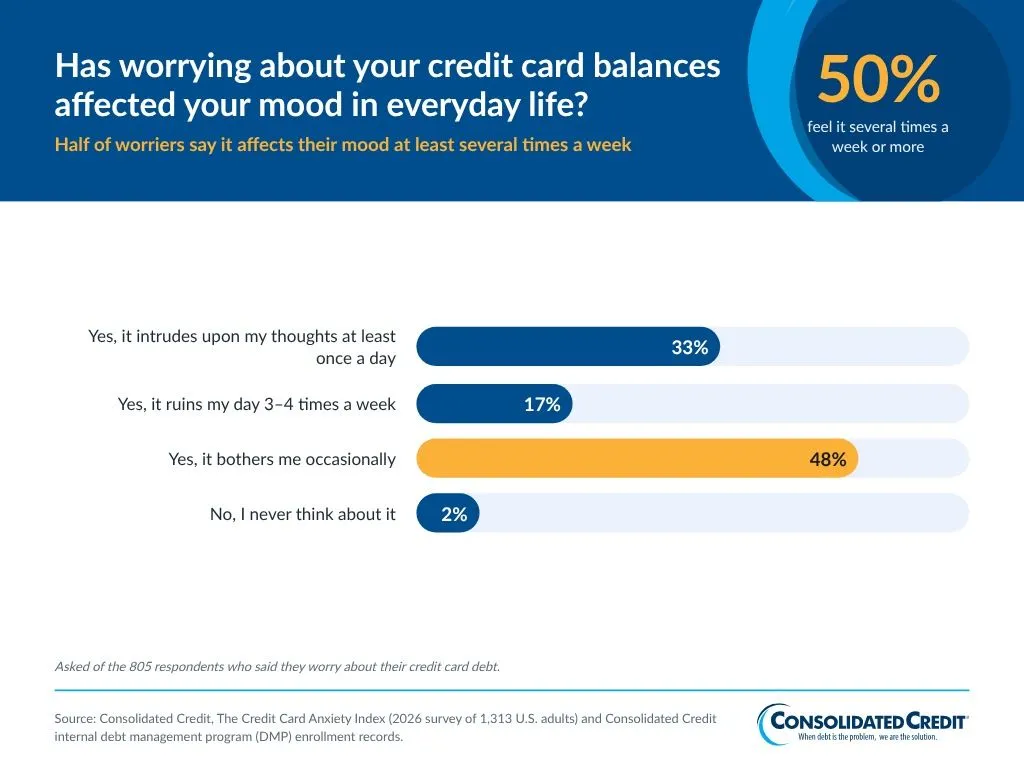
The bigger question
Holiday expectations can collide with housing costs and inflation. Avoiding statements leaves those pressures unaddressed. Are you quietly shopping through anxiety while balances climb, and what will you change about your spending, your planning or seeking help before that private struggle follows you into 2027?
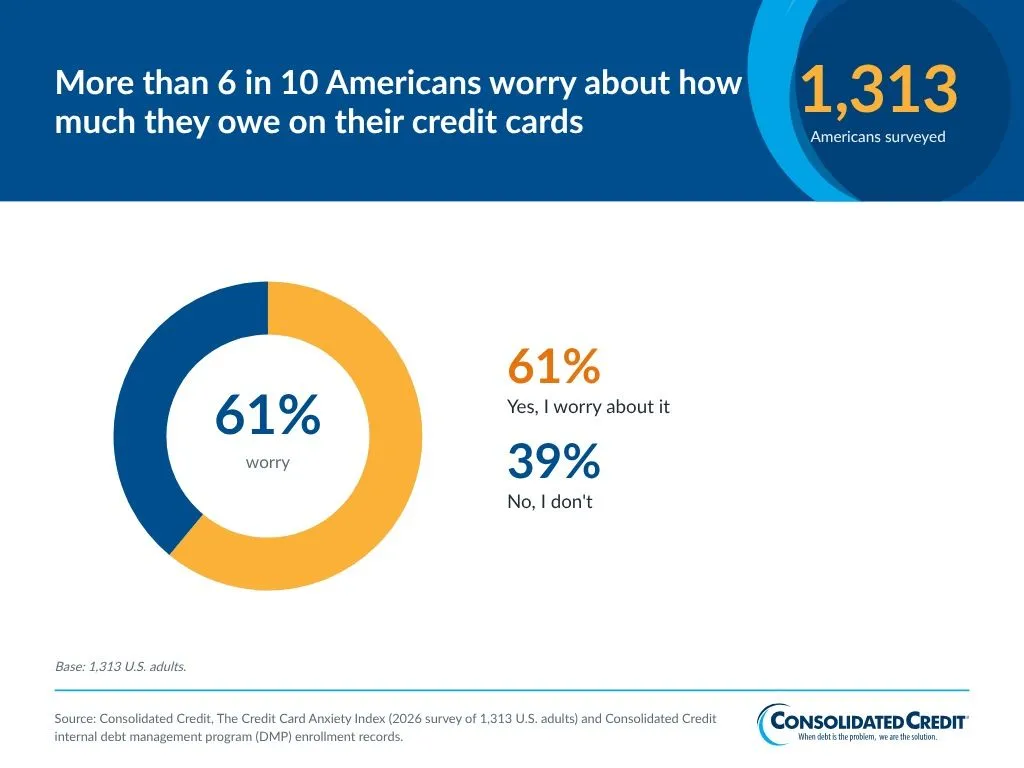
The stats
The survey of 1,313 U.S. adults describes financial worries that extend beyond checkout.
- 75% of respondents ages 30 to 44 worry about credit card debt.
- 34% of worried cardholders identify accumulating interest as their primary concern.
- 36% of worried respondents have avoided checking balances or statements.
- Among Americans over 60 who worry, 60% say no one in their life knows how they feel about their credit card debt, nearly triple the rate among 30- to 44-year-olds (22%).
Additional free planning tools
- SMART goals: Set specific financial targets for 2027
- NerdWallet Budget Worksheet — Compare needs, wants, savings and debt payments.
- Investor.gov Savings Goal Calculator — Calculate monthly savings needed for a specific goal.